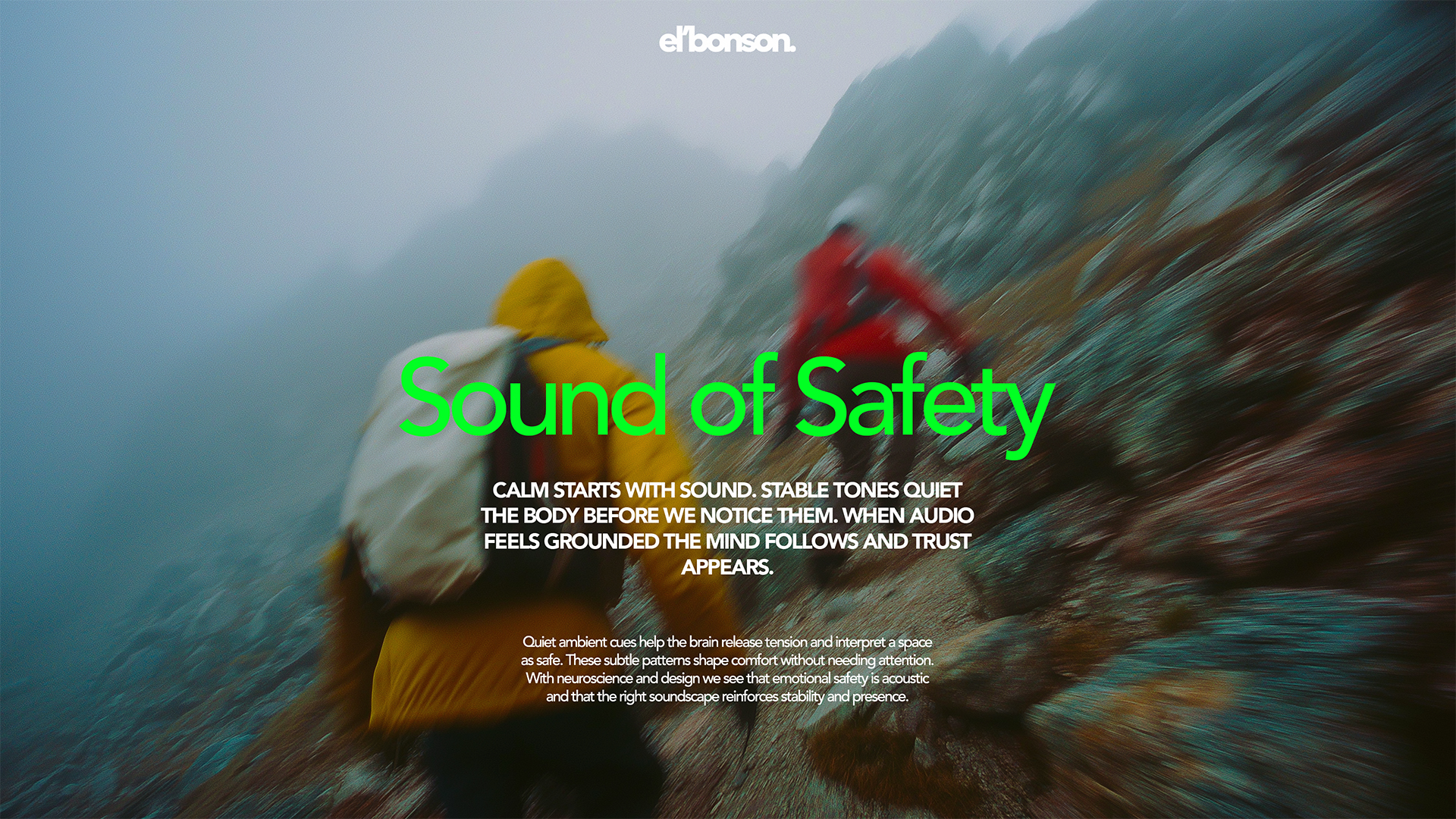
Sound of Safety
How Certain Noises Calm Us Instantly and Why We Never Question It
Introduction
Safety is often defined through physical conditions, visual cues or spatial characteristics. Yet long before humans relied on sight to understand the world, sound served as the primary indicator of threat or stability. The auditory system evolved to remain active even during sleep, constantly scanning the environment for changes. Today, the same system still guides emotional regulation. Certain sounds reduce stress at a biological level, even when the listener does not consciously register them. These familiar auditory cues shape how we evaluate spaces, experiences and interactions.
The Evolutionary Foundation
In early human history, environments with stable, low intensity soundscapes signaled the absence of predators and danger. Soft ambient noise, consistent airflow and subtle low frequency resonance indicated that life was functioning normally. Silence, in contrast, often meant that something was wrong. Over thousands of years, the brain learned to associate gentle, predictable sound textures with safety.
This evolutionary memory still affects modern life. The hum of a refrigerator, the low rumble of a train in the distance and the soft voices in a café reproduce the auditory conditions that once indicated survival. These cues provide reassurance on a subconscious level. They tell the nervous system that the world is stable enough to relax.
Neural Pathways of Calmness
The auditory system processes environmental sound faster than conscious thought. Signals travel directly to the amygdala and hippocampus, regions responsible for emotional processing and threat detection. Low frequency, continuous and non intrusive sounds reduce amygdala activation, lowering stress hormones and slowing heart rate.
This is why certain environments feel comfortable even before they look comfortable. The auditory system makes the decision first. If the soundscape aligns with the brain’s internal model of a safe environment, the body shifts into a calmer physiological state. When the soundscape is chaotic or unpredictable, the opposite occurs.
Everyday Sound Cues We Mistake for “Ambience”
Modern life is filled with auditory signals that quietly regulate our emotions. The soft clinking of dishes in a restaurant, the muffled resonance of footsteps in a hallway and the gentle airflow in a well designed workspace all contribute to a perception of stability. These sounds are not decorative. They form the baseline conditions that allow us to feel grounded.
We rarely notice them consciously because the brain is designed to ignore safe patterns. Only deviations capture attention. This means that the most important auditory cues are often the ones we never think about. They act as environmental confirmation that everything is functioning as expected.
Acoustic Stability and Emotional Regulation
A soundscape that feels safe is typically defined by three characteristics: continuity, predictability and softness. Continuity indicates that the environment is active but not threatening. Predictability allows the brain to conserve energy by reducing the need for constant scanning. Softness limits the risk of acoustic overstimulation.
When these conditions are present, emotional regulation becomes easier and more natural. People feel calmer, decision making improves and perceived stress decreases. In retail, hospitality, mobility and digital products, environments that integrate these principles tend to increase comfort and engagement without relying on visual cues.
Implications for Design and Brand Experience
Understanding the sound of safety has direct applications across industries. In physical spaces, controlled ambient sound can transform how visitors perceive comfort, privacy and trust. In digital environments, micro interactions and subtle audio feedback can reduce friction and improve clarity. For brands, integrating safe auditory cues creates a sense of reliability and emotional alignment that visuals alone cannot provide.
Sound is not an accessory. It is a physiological signal. When designed intentionally, it becomes a strategic tool for enhancing well being and shaping positive experiences.
Conclusion
Safety is not only seen or felt. It is heard. The quiet hums, soft textures and stable auditory patterns that surround us every day communicate security in ways far older and deeper than language. By understanding how the brain interprets these signals, designers and brands gain the ability to shape environments that reduce stress and elevate comfort. The sound of safety is subtle, but its impact is profound. It is one of the most powerful and overlooked foundations of human experience.