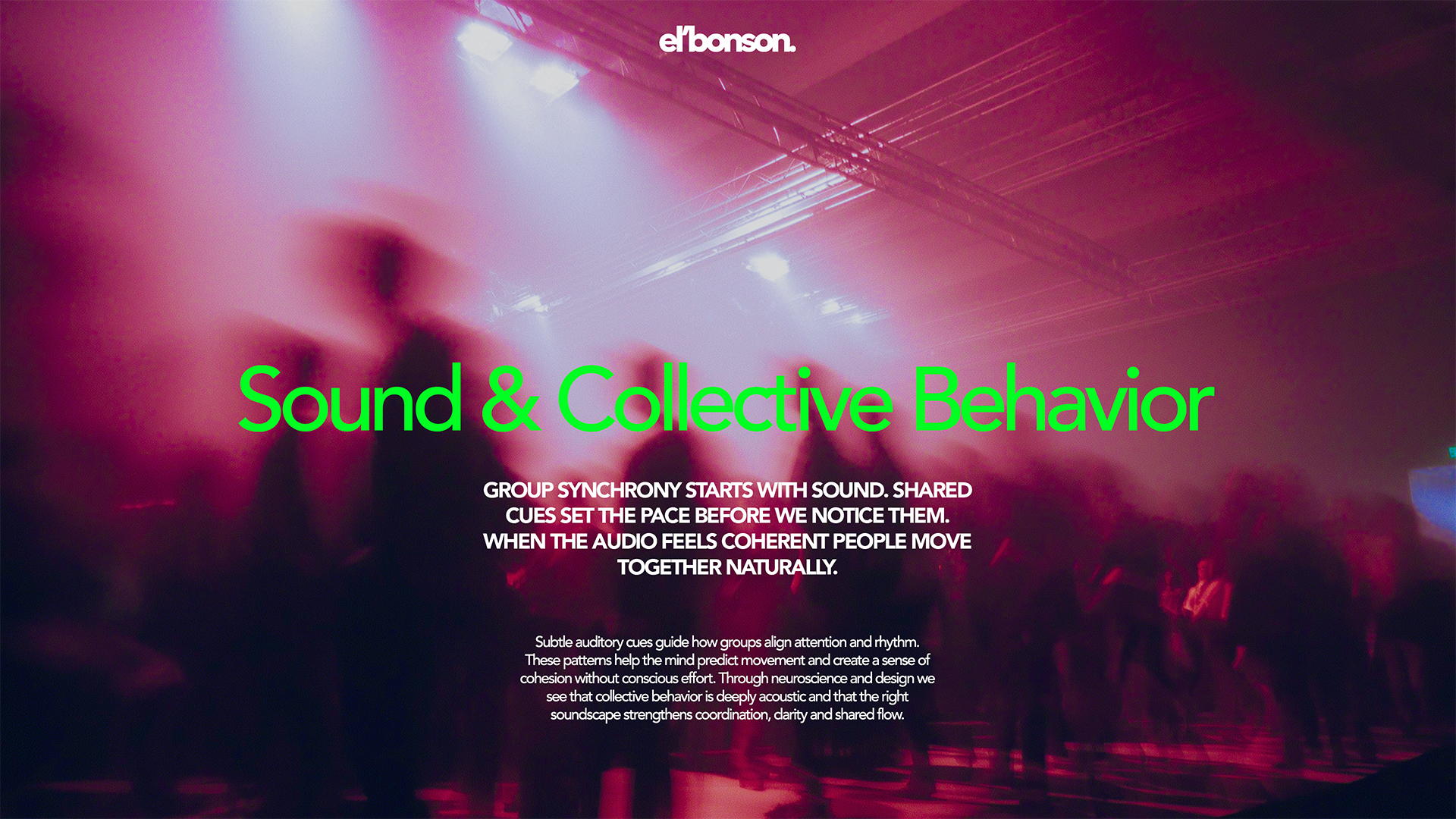
Sound & Collective Behavior
How auditory cues shape human coordination, rhythm and shared decision-making
Introduction
Collective behavior is usually explained through visual signals, leadership dynamics or social norms. However, one of the most powerful drivers of group coordination is sound. Before humans developed complex language or sophisticated social structures, auditory patterns guided survival, signaling when to move, when to stay alert and when to relax.
Today the same mechanisms operate in modern environments. Groups of people adjust pace, attention and attitude based on shared soundscapes. These responses happen quickly and subconsciously, long before conscious reasoning takes place. Understanding how sound shapes collective behavior offers a new perspective on how humans interact as groups and how experiences can be intentionally designed to support cohesion.
Auditory Foundations of Group Coordination
The auditory system evolved as a real time monitoring tool. Unlike vision, which is often obstructed, sound provides continuous information about direction, distance and movement. Early human groups relied on vocal tone, rhythm and environmental noise to maintain cohesion. A shift in pitch suggested a change in group intention. A shared rhythm signaled coordinated movement. A calm acoustic environment indicated that conditions were safe.
These primitive functions remain intact. When people walk together, they often fall into a synchronized pace simply by hearing each other’s footsteps. When individuals work in the same space, they unconsciously adjust their activity levels based on the surrounding sound. Auditory cues establish a shared temporal structure that guides group behavior without the need for explicit communication.
Neural Mechanics of Synchronization
The brain is equipped with specialized networks that detect patterns in timing and rhythm. These networks allow individuals to anticipate the next beat or action, aligning internal timing with external cues. When multiple people share the same auditory input, their timing systems align naturally. This phenomenon explains why clapping becomes coordinated in large audiences or why teams performing manual tasks fall into collective rhythm.
This synchronization reduces cognitive load. Rather than calculating or negotiating pace, groups rely on sound to maintain alignment. The result is smoother coordination and more efficient collective action.
Acoustic Signals of Leadership and Influence
Leadership can emerge through auditory presence as much as through visual cues. A voice with consistent tone and steady pacing conveys confidence and direction. People tend to follow individuals whose auditory signals communicate clarity and calmness. These cues influence group attention and can shift collective decisions.
Sound also shapes followership. When people hear others adjusting to a particular tempo or pattern, they join the rhythm automatically. This occurs in open offices, crowded streets and digital platforms. Sound lowers uncertainty and provides a stable reference point that groups instinctively follow.
Emotional Regulation Through Shared Sound
Emotions spread through sound. Elevated noise increases alertness and tension, while subtle and stable soundscapes reduce stress. Groups respond collectively to these acoustic conditions. A controlled ambience can make a crowd feel orderly. A chaotic sound environment can create restlessness even without visible disruption.
These responses explain why well designed acoustic environments create smoother flow in retail spaces, stronger focus in workplaces and more positive engagement in hospitality settings. Sound shapes not only individual emotions but the entire emotional climate of a group.
Implications for Design, Strategy and Experience
Recognizing the influence of sound on collective behavior opens significant opportunities across industries.
In physical environments, sound can guide movement, regulate pace and improve navigation. Workspaces benefit from consistent, low intensity soundscapes that enhance coordination and reduce distractions. Retail and hospitality can use auditory cues to create flow and influence dwell time.
In digital products, micro sounds serve as navigational anchors that help users move through tasks together, feel system reliability and perceive direction.
For brands, sound becomes a strategic tool for shaping how groups experience a space, service or product. It influences trust, comfort, clarity and collective decision-making in ways that visuals alone cannot achieve.
Conclusion
Sound is one of the most powerful forces shaping collective human behavior. It aligns movement, spreads emotion, clarifies leadership and stabilizes group dynamics. Although these processes operate quietly in the background, their impact is profound. By understanding the auditory principles behind collective behavior, brands and designers can craft experiences that support cohesion, enhance flow and create environments where groups act with clarity and ease. Sound does not simply accompany group behavior. It leads it.